
Short
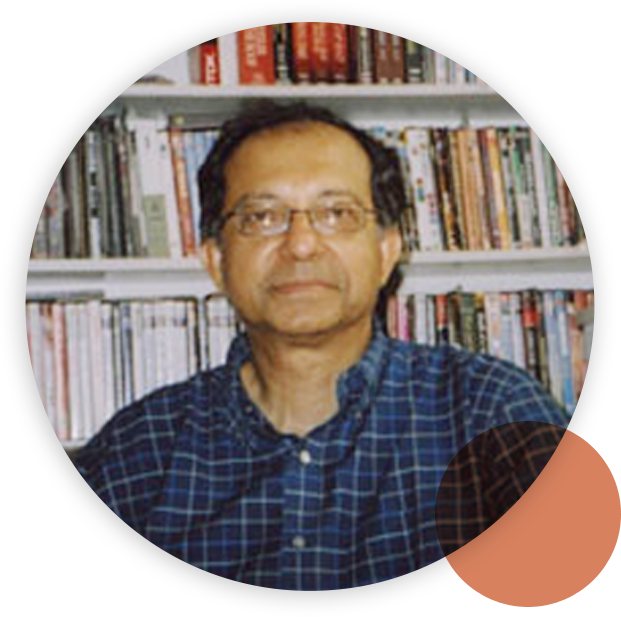
Joy Das is Professor of Economics and the Carl Marks Professor at Cornell University. From 2012 to 2016 he was the Chief Economist of the World Bank. Educated at St. Stephen’s College, Delhi, and the London School of Economics, Basu has published extensively in development economics, game theory, welfare economics and industrial organization. His most recent book The Republic of Beliefs: A New Approach to Law and Economics was published by Princeton University Press in 2018.
Full
Joy Das is Professor of Economics and the Carl Marks Professor of International Studies at Cornell University. He is currently President of the International Economic Association, serving a term 2017-2020. He was formerly Senior Vice President and Chief Economist of the World Bank, 2012-16, and, prior to that, Chief Economic Adviser to the Indian Government, 2009-2012.
Das received his PhD and M.Sc (Econ) from the London School of Economics and BA (Hons) from St. Stephen’s College, Delhi. He has received honorary doctorates from several institutes and universities, including IIT Bombay, Fordham University New York, and the University of Bath U.K.
Joy Das has published widely in the areas of Development Economics, Industrial Organization, Game Theory and Welfare Economics. His two most recent books are An Economist in the Real World: The Art of Policymaking in India (MIT Press and Penguin Random House, 2015) and The Republic of Beliefs: A New Approach to Law and Economics (Princeton University Press, 2018. His books have been translated into several languages, including Chinese, Spanish, Italian, Russian and French.
Professor Basu has contributed popular articles to magazines and newspapers, such as The New York Times, Scientific American, India Today, Business Standard and BBC News Online.
In May 2008 he was awarded one of India’s highest civilian awards, the Padma Bhushan, by the President of India. Joy Das has held visiting positions at the Institute for Advanced Study, Princeton, and the London School of Economics, Harvard University, Princeton University and M.I.T. He was Professor of Economics at the Delhi School of Economics, where in 1992 he founded the Centre for Development Economics and was its first Executive Director. He is also a founding member of the Madras School of Economics.
Academics
Contrary to popular belief, Lorem Ipsum is not simply random text. It has roots in a piece of classical Latin literature from 45 BC, making it over 2000 years old. Richard McClintock, a Latin professor at Hampden-Sydney College in Virginia, looked up one of the more obscure Latin words, consectetur, from a Lorem Ipsum passage, and going through the cites of the word in classical literature, discovered the undoubtable source. Lorem Ipsum comes from sections 1.10.32 and 1.10.33 of "de Finibus Bonorum et Malorum" (The Extremes of Good and Evil) by Cicero, written in 45 BC. This book is a treatise on the theory of ethics very popular during the Renaissance. The first line of Lorem Ipsum, "Lorem ipsum dolor sit amet..", comes from a line in section 1.10.32.
Research
Contrary to popular belief, Lorem Ipsum is not simply random text. It has roots in a piece of classical Latin literature from 45 BC, making it over 2000 years old. Richard McClintock, a Latin professor at Hampden-Sydney College in Virginia, looked up one of the more obscure Latin words, consectetur, from a Lorem Ipsum passage, and going through the cites of the word in classical literature, discovered the undoubtable source. Lorem Ipsum comes from sections 1.10.32 and 1.10.33 of "de Finibus Bonorum et Malorum" (The Extremes of Good and Evil) by Cicero, written in 45 BC. This book is a treatise on the theory of ethics very popular during the Renaissance. The first line of Lorem Ipsum, "Lorem ipsum dolor sit amet..", comes from a line in section 1.10.32.
Teaching
Contrary to popular belief, Lorem Ipsum is not simply random text. It has roots in a piece of classical Latin literature from 45 BC, making it over 2000 years old. Richard McClintock, a Latin professor at Hampden-Sydney College in Virginia, looked up one of the more obscure Latin words, consectetur, from a Lorem Ipsum passage, and going through the cites of the word in classical literature, discovered the undoubtable source. Lorem Ipsum comes from sections 1.10.32 and 1.10.33 of "de Finibus Bonorum et Malorum" (The Extremes of Good and Evil) by Cicero, written in 45 BC. This book is a treatise on the theory of ethics very popular during the Renaissance. The first line of Lorem Ipsum, "Lorem ipsum dolor sit amet..", comes from a line in section 1.10.32.